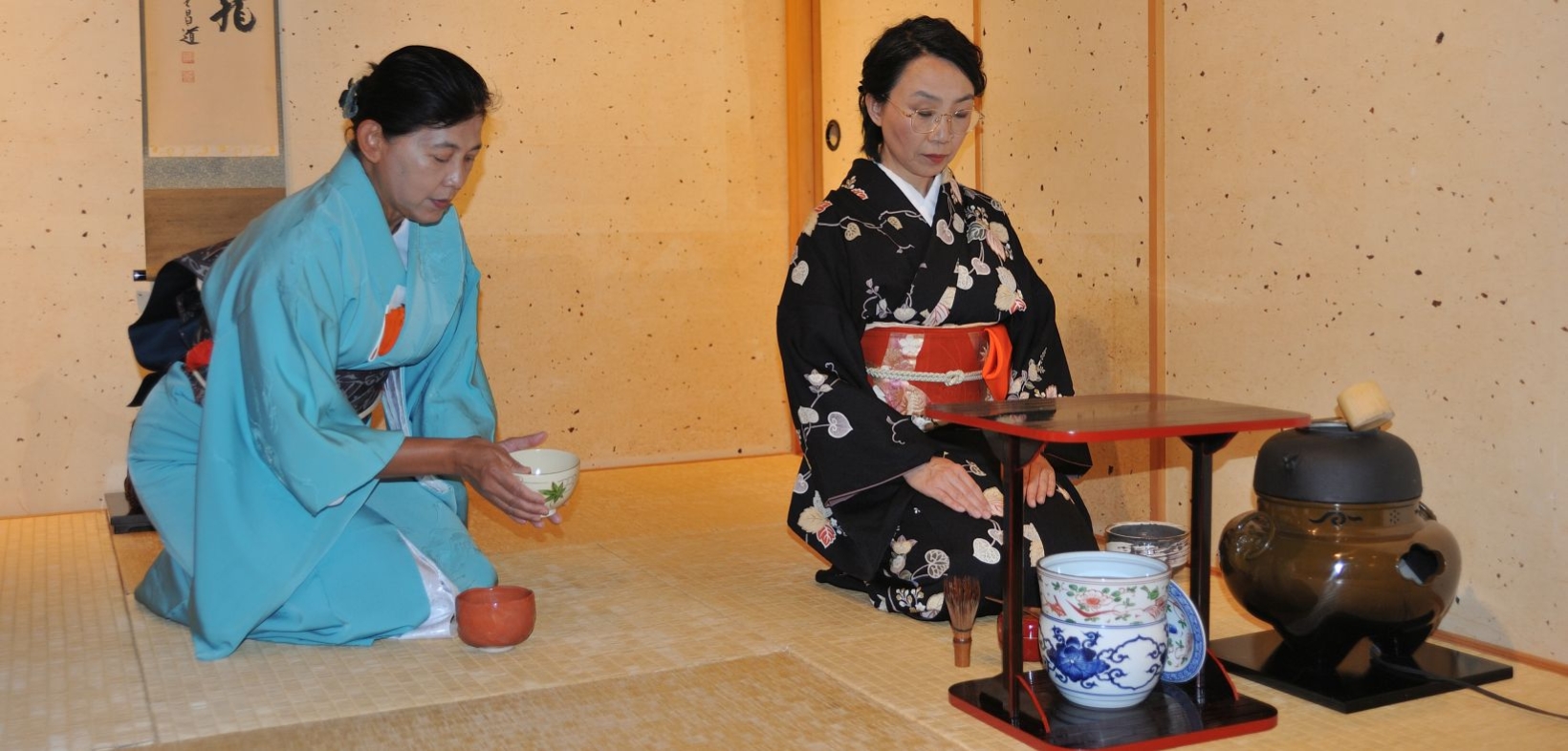
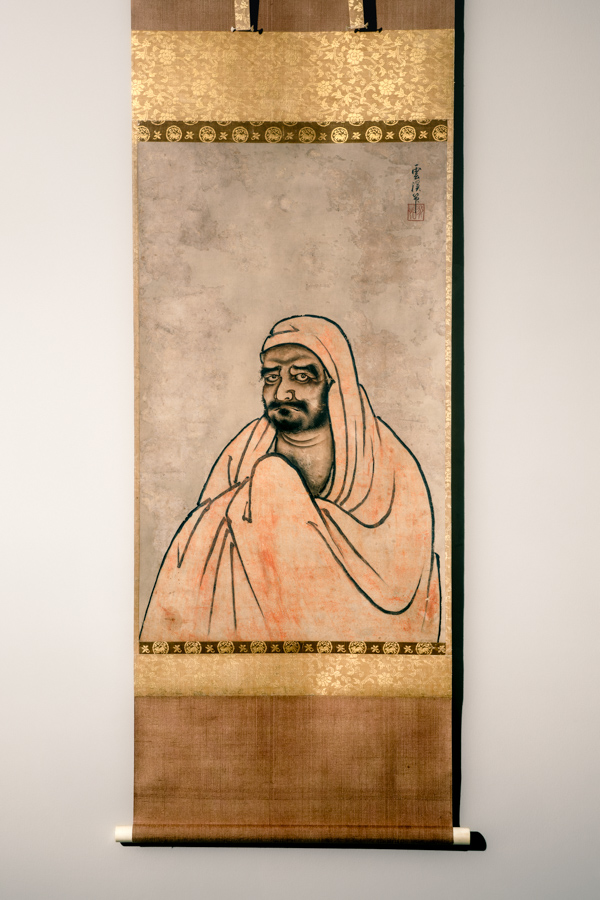
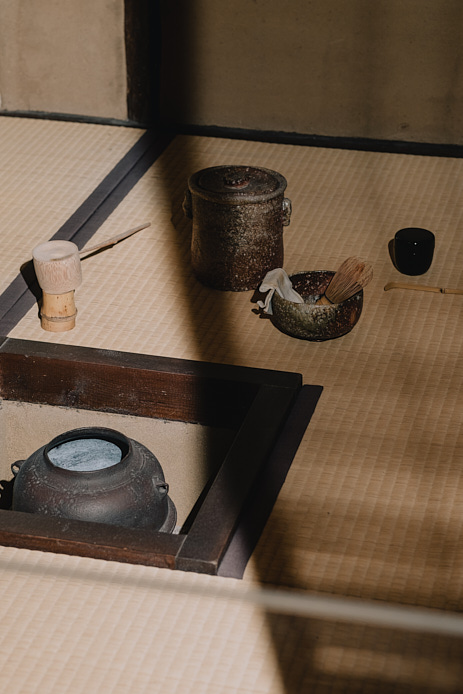
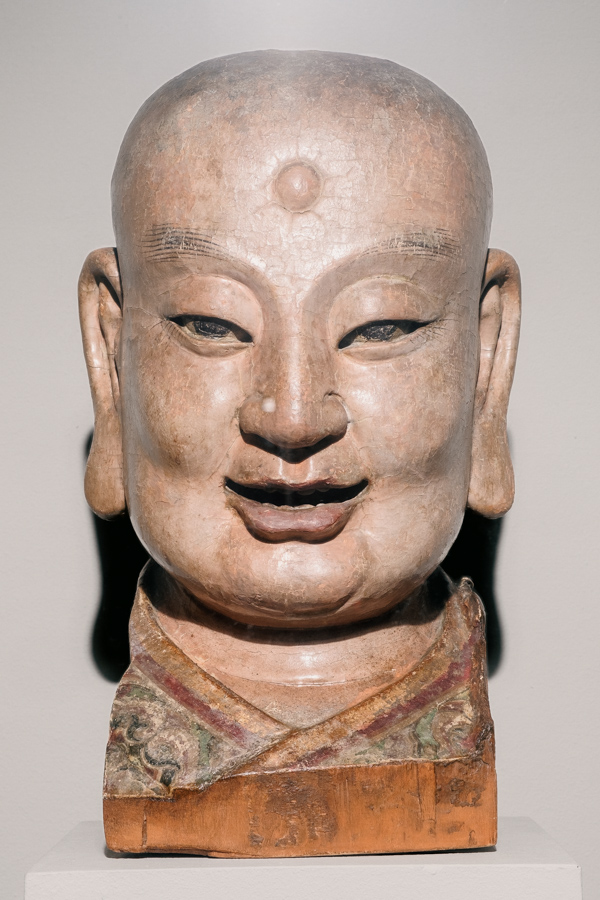
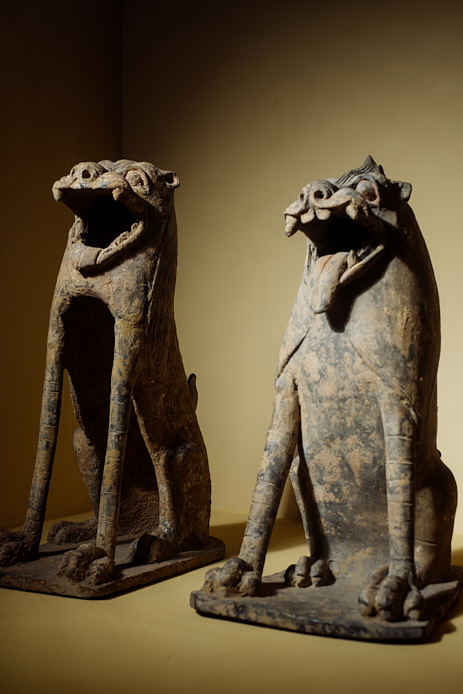
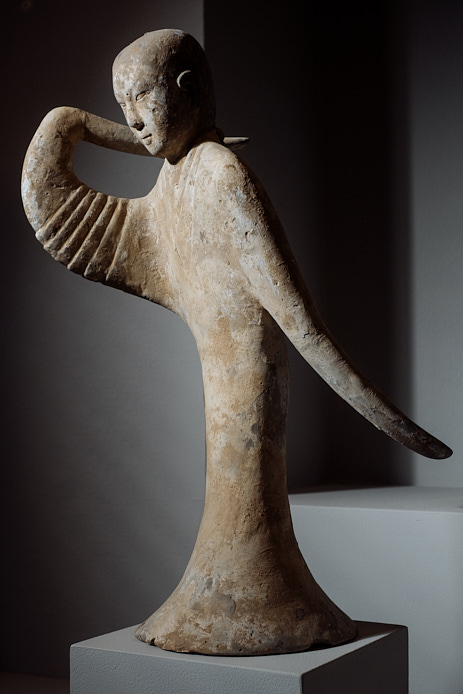
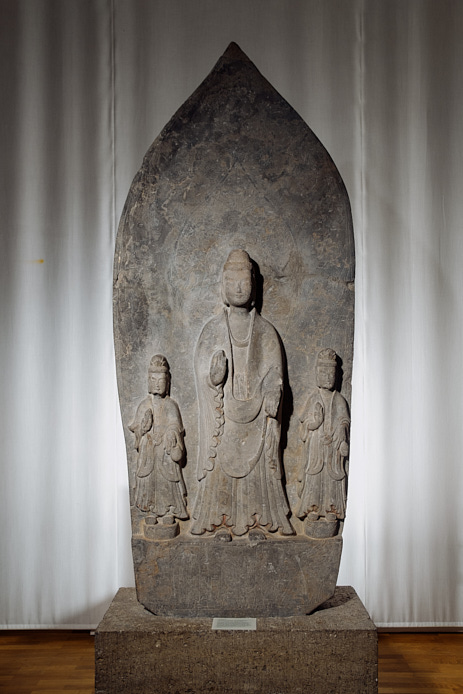
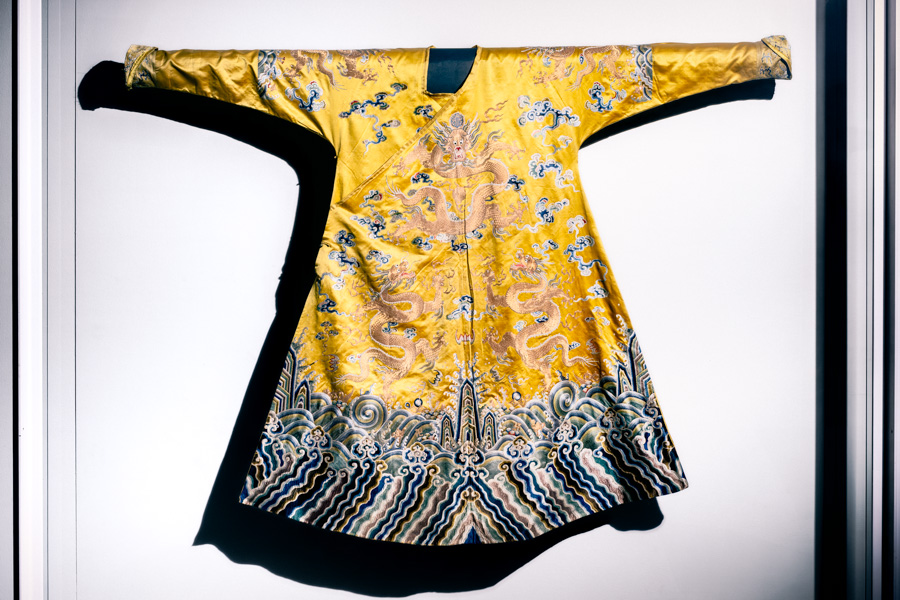
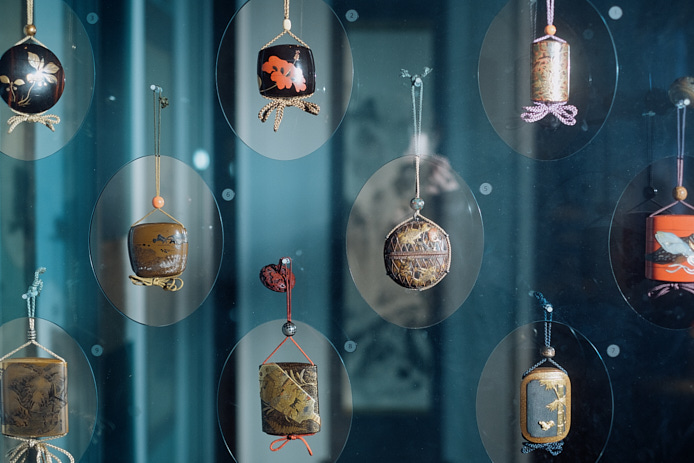
Since 2024, the art of China, Japan and Korea shines in a new ambience at the Linden-Museum. The exhibition presents archaic ritual bronzes from ancient China, burial objects from the Han to Tang dynasties (2nd century BC – 10th century AD), Buddhist art, masterpieces of Chinese ceramics, lacquer art from three millennia as well as highlights of classical Japanese, Chinese and Korean painting from the 17th – 19th centuries. There are also replicas of a Japanese teahouse and a traditional living room.
Burial cult and concepts of the afterlife in ancient China
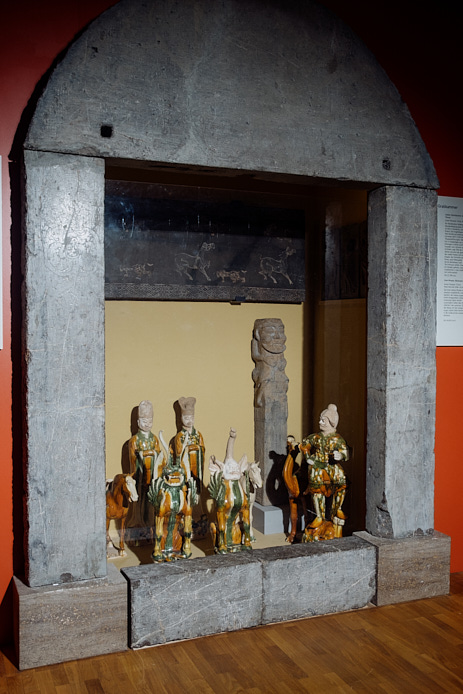
This is followed by the extensive subject area of funerary cult and ideas of the afterlife in ancient China with ritual bronzes and grave goods. The model of a burial chamber gives an idea of the original use of such objects. Since many of the earliest achievements of ancient China were preserved primarily in the elaborately decorated tombs of high-ranking personalities, these very old objects are also presented here in an appropriate context.
Chinese ceramics
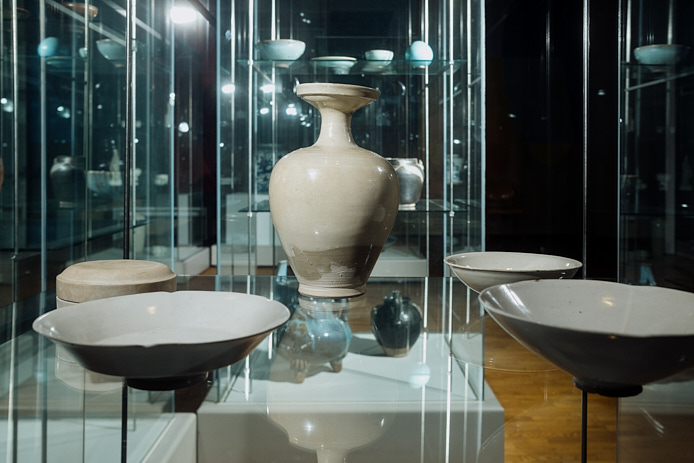
A major focus of the exhibition is the history and development of Chinese ceramics over the past 6,000 years. It begins with early finds of Neolithic ceramics – often burial objects – and traces the technical developments, glazes, styles and forms through the various historical periods of ancient China to the most delicate treasures of the finest porcelain. The trade in ceramics is also discussed, with objects salvaged from shipwrecks and export porcelains destined for the European market.
Japanese interiors
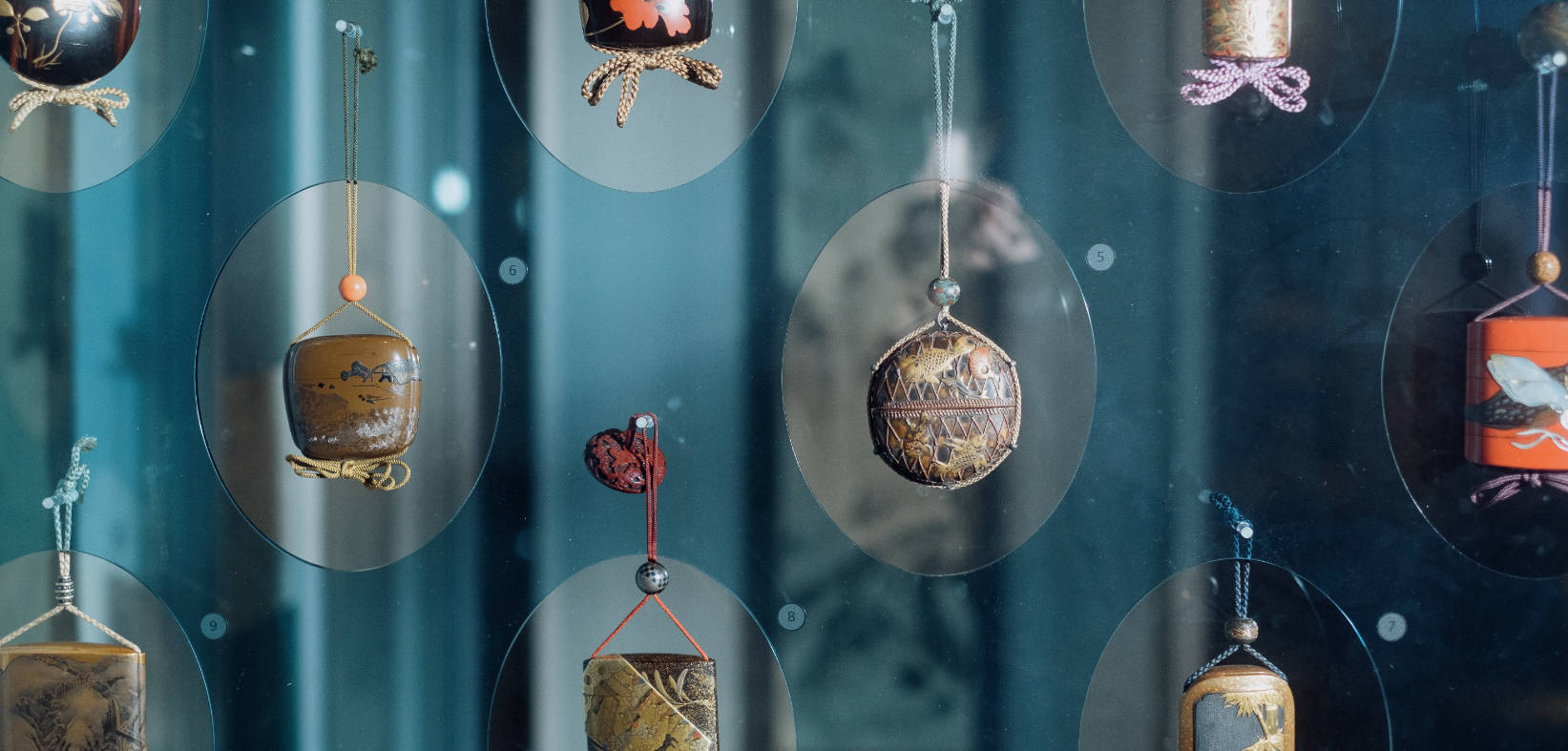
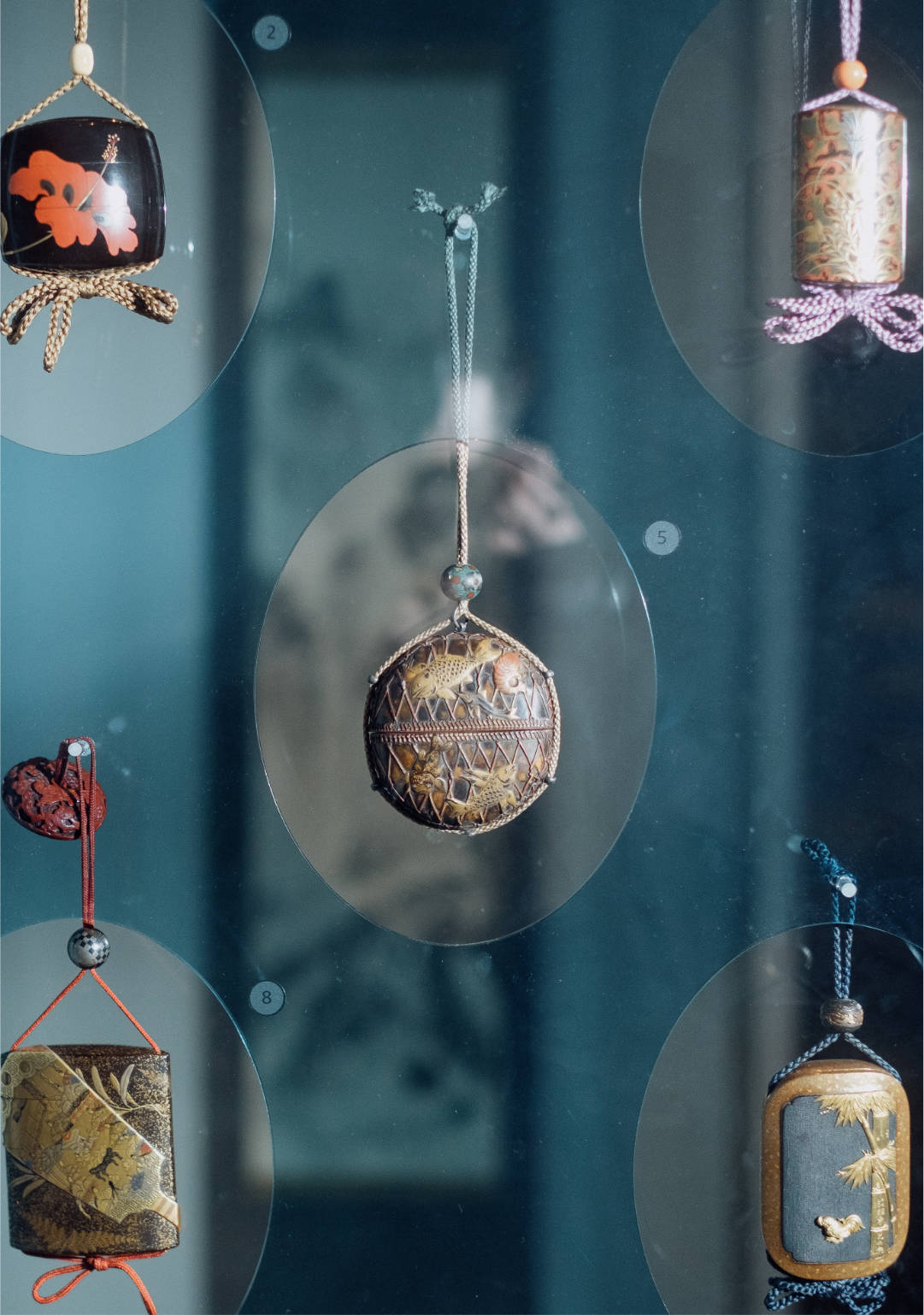
Japan is also represented with ceramics (especially tea ceramics), textiles and decorative arts made of various materials. Some of these are exhibited in replicas of a living room from the late Edo period (1603 – 1867), a lacquer studio and a tea house, reconstructed in collaboration with Japanese architects and scholars. The Lacquer Cabinet presents masterpieces of lacquer art from China, Japan and Korea.
Era of Transition
from 9 December 2025
In the 19th and 20th centuries, trade and colonialism brought Imperial China into increasingly frequent contact with European countries. As Europe embraced artistic modernism, Chinese painters grappled with a question: how could they balance traditional legacies with emerging styles? Responses varied: some integrated European techniques, while others upheld traditional methods. Moving beyond the binary of Chinese and Western paintings, it was an era marked by stylistic pluralism, reflecting a dynamic interplay of visual languages under a common wish to bring ink paintings to the wider world. The selection of 20th-century Chinese paintings curated by Hiu Yeung Chan (Transcultural Studies, Heidelberg University) features works by renowned artists, including Qi Baishi, Xu Beihong, Huang Binhong, Li Keran, and Liu Guosong, who made influential contributions to the transformation of the Chinese art scene in the 20th century.